

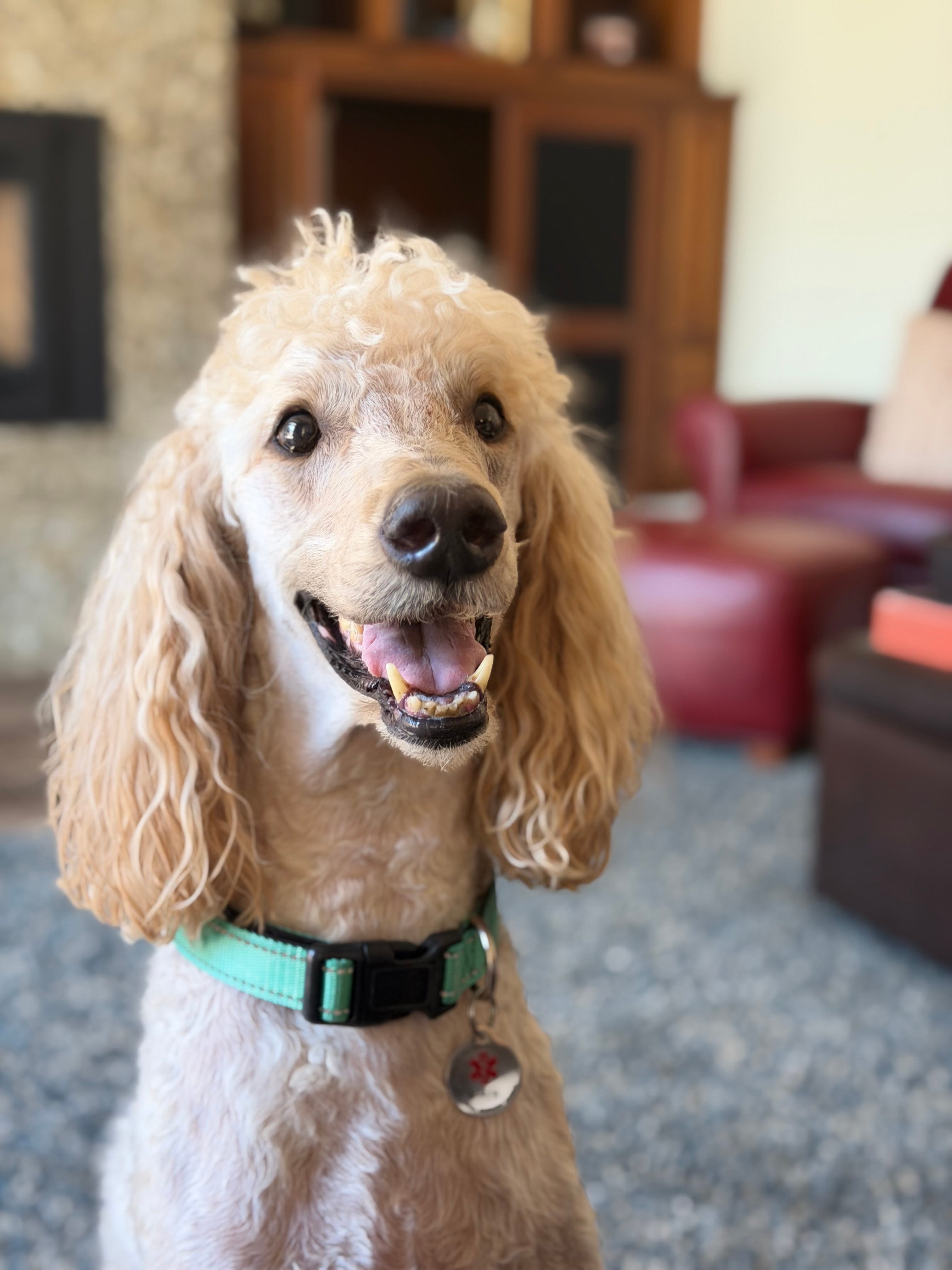
Oliver was my favorite dog, ever. There. I said it.
For five years, Addison’s disease, heart disease, kidney disease, medications, injections, blood panels, and specialist visits became part of our family routine. We gladly traded the inconvenience for more time.
When Annette, Riley, and Axton arrived, the room became strangely peaceful. Sad, certainly, but not morbid. We all knew why we were there.
Oliver lay there panting hard, his heart visibly pounding out of rhythm, while I did all I could to comfort this companion who knew, as they all seem to, that it was time to say goodbye.
The doctor came in and gently explained what would happen next. We were free to leave at any time.
Oliver was given a sedative, and we were left alone with him.
His calmness somehow made our sadness even deeper.
When the doctor returned with the final injection, Annette quietly stepped outside. Riley stayed.
We had been told that after Oliver passed, Axton would walk over, smell him, and immediately understand. Most importantly, he wouldn’t go home searching for his older brother and lifelong companion.
That’s exactly what happened.
We cried a little more. Riley left with Axton. Before I walked out, I thanked the doctor for her skill and kindness in what must surely be one of the hardest parts of her profession.
It’s been nearly a month now. We have Oliver’s ashes and his paw print. Soon we’ll scatter his ashes at his favorite beach in Cayucos.
But the hole in our hearts persists. We see him everywhere. Every day.
Like people, Oliver was irreplaceable. He was a one-time occurrence in the universe. What we shared belonged only to us. No one else ever knew the Oliver we knew. That version of him now exists only in the memories of the people who loved him.
Axton has been noticeably sad too. We’re doing what we can with extra walks and more attention, but he’s no chump. He knows grief. We’re the ones pretending to understand it.
And all those platitudes — “Cherish the time you had together.” “Death is a part of life.” Note to self: never say those things. They aren’t helpful. They’re an attempt to close a door that isn’t ready to close, and grief doesn’t take instruction.
What Axton understands, and what Oliver spent almost ten years demonstrating, is something closer to this: imagine describing dogs to someone who had never seen one.
They live with you. They think you’re fascinating. They celebrate your return from taking out the garbage as though you’ve crossed an ocean. They forgive instantly. They don’t care what you accomplished today. They’re simply thrilled you’re here.
Dogs never forget to live the life they have. Humans seem to forget almost every day. We manage entire seasons on autopilot, waiting for some future version of ourselves to notice we’re alive. Oliver never once did that. Neither does Axton. Grief, for a dog, isn’t a phase to get through. It’s just the current true thing, felt completely, until it isn’t anymore.
That’s the whole curriculum, really. Dogs spend their entire lives teaching us two things: how to greet someone you love and how to say goodbye.
It’s up to us to live it.
Thanks, I needed to cry this morning! I put my last dog down almost 3 years ago and am dogless for the first time in 30 years. I just can’t handle that pain again and while I miss that companionship dearly, being “free” has its own benefits.
I'm crying too, Jim. Thank you for sharing your grief and your loss. We are here with you and for you, and we will remember Oliver too. May peace be with you...